


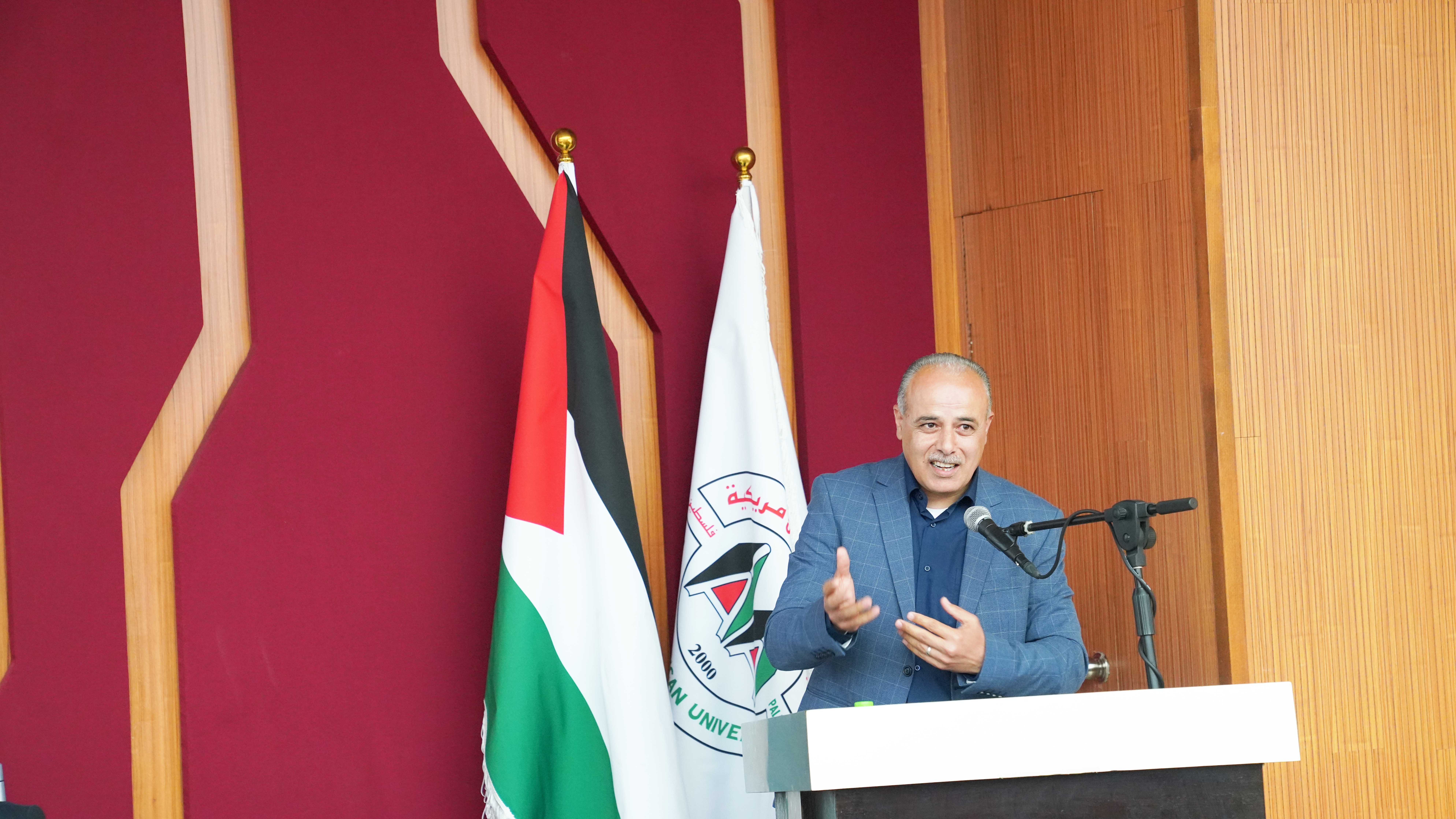
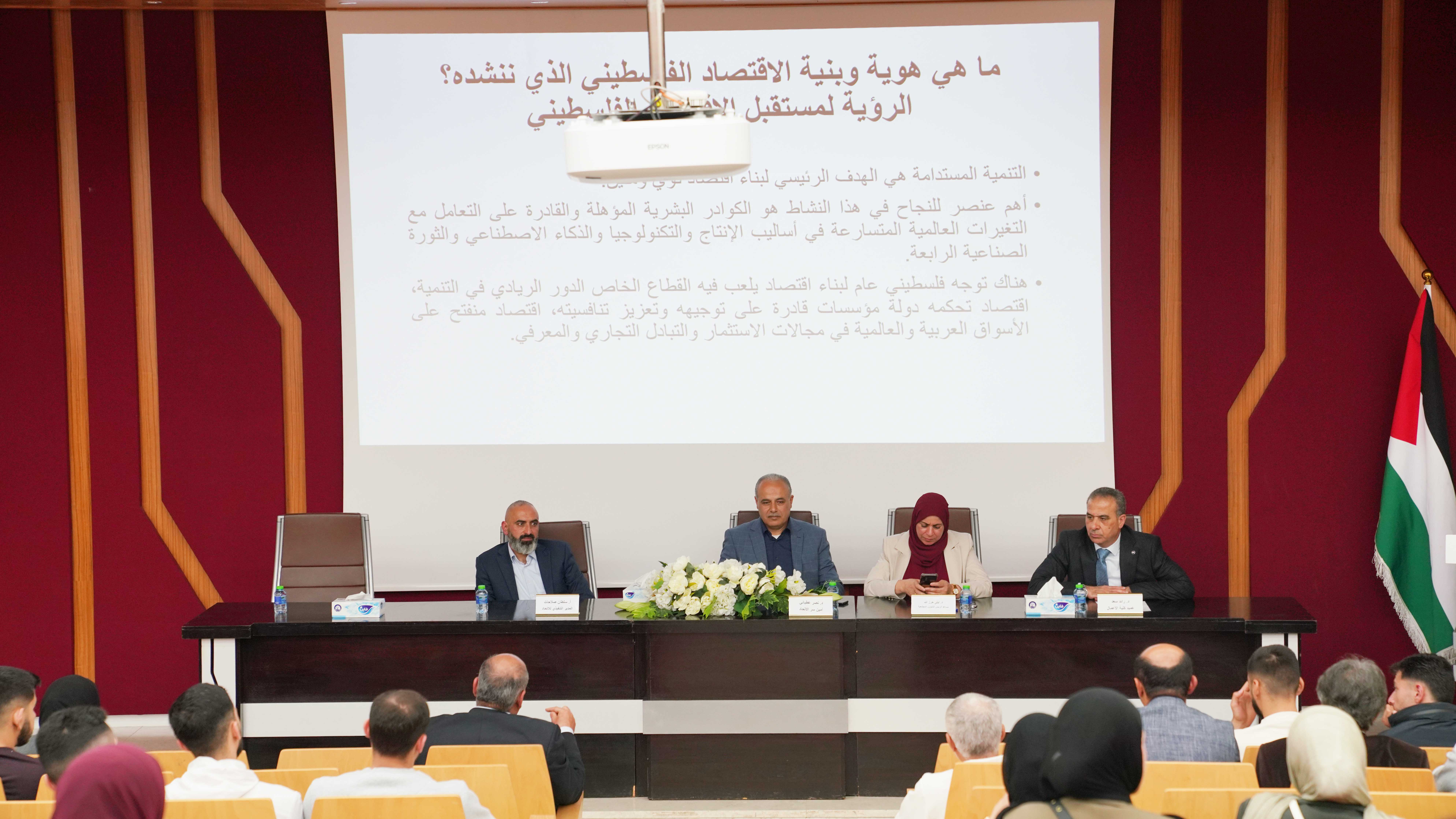
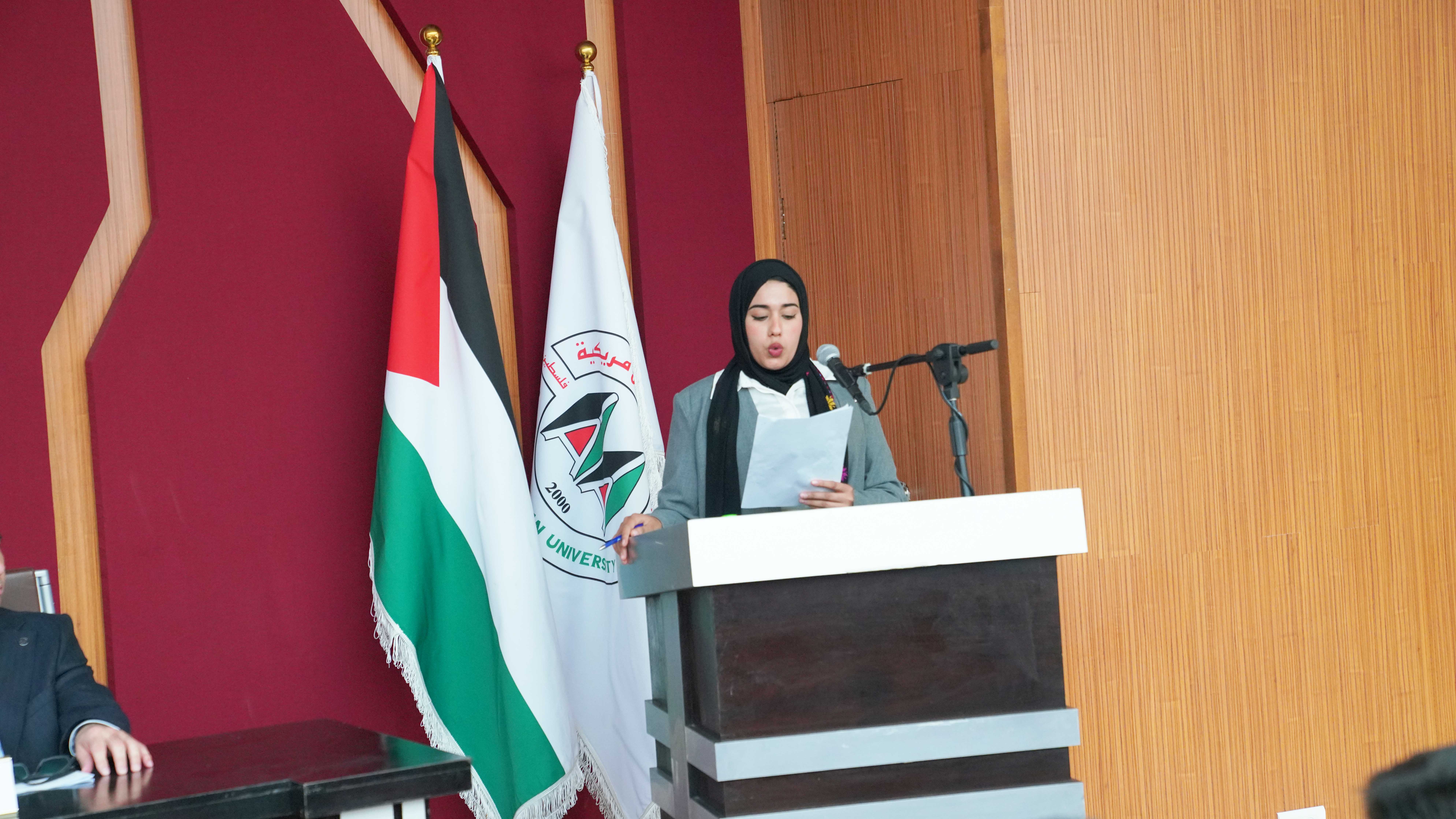
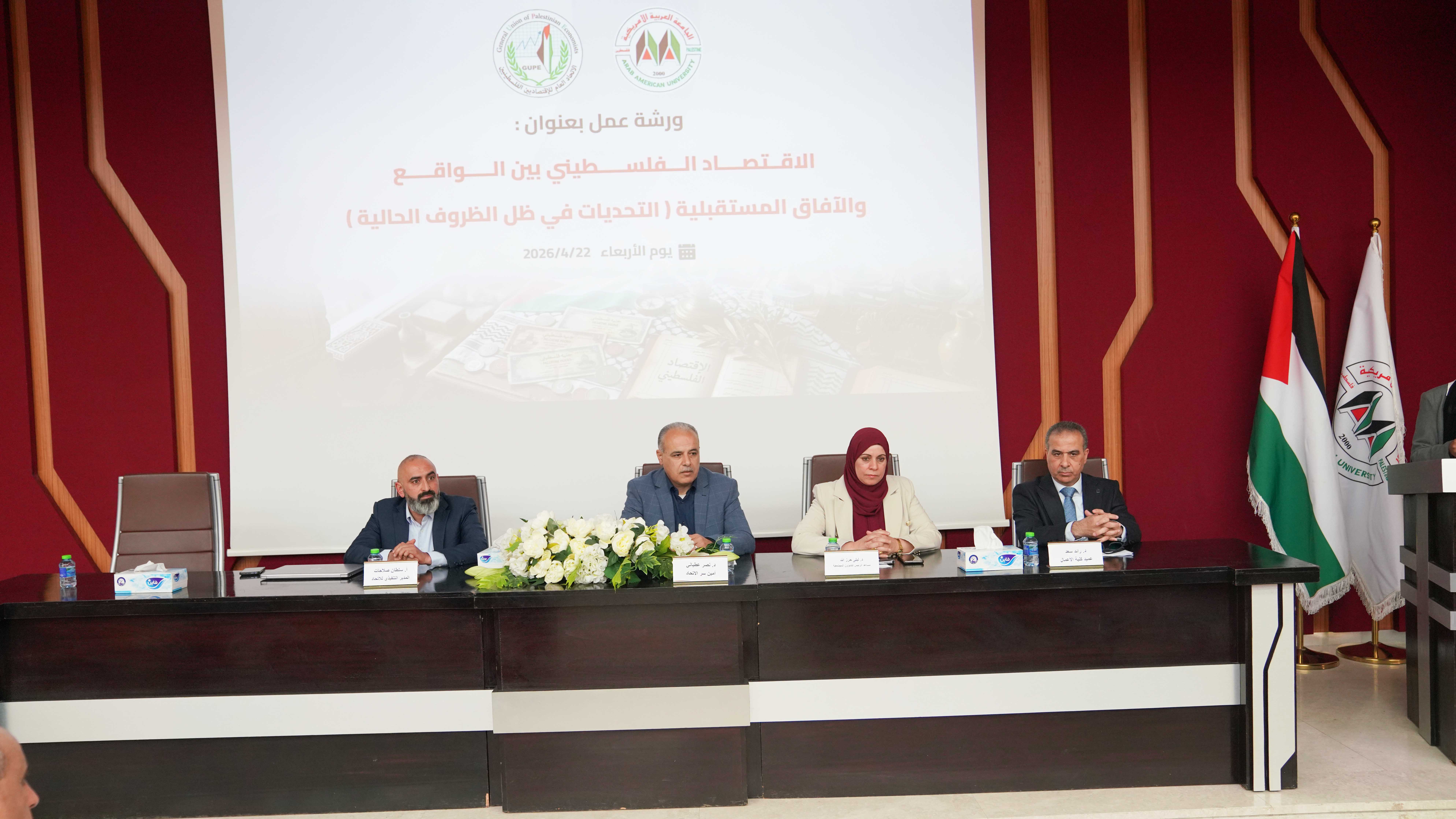
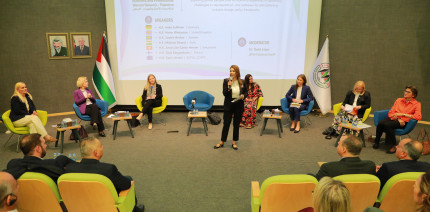
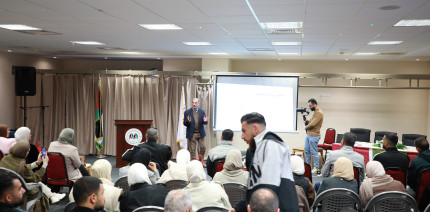
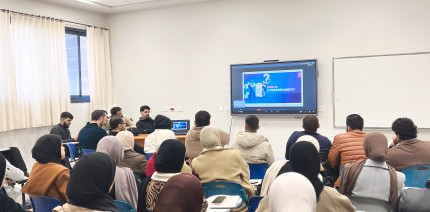
The Arab American University, in partnership with the General Union of Palestinian Economists, held a specialized workshop entitled "The Palestinian Economy: Between Reality and Future Prospects / Challenges in Current Circumstances." The workshop targeted students from the Faculty of Business and other University students.
Participants included Dr. Laila Herzallah, Assistant to the University President for Community Affairs; Dr. Raed Saad, Dean of the Faculty of Business; Dr. Nasr Atiyani, Secretary of the General Union of Palestinian Economists; and Mr. Sultan Salahat, Executive Director of the Union. The workshop aimed to strengthen dialogue between national academic and economic institutions.
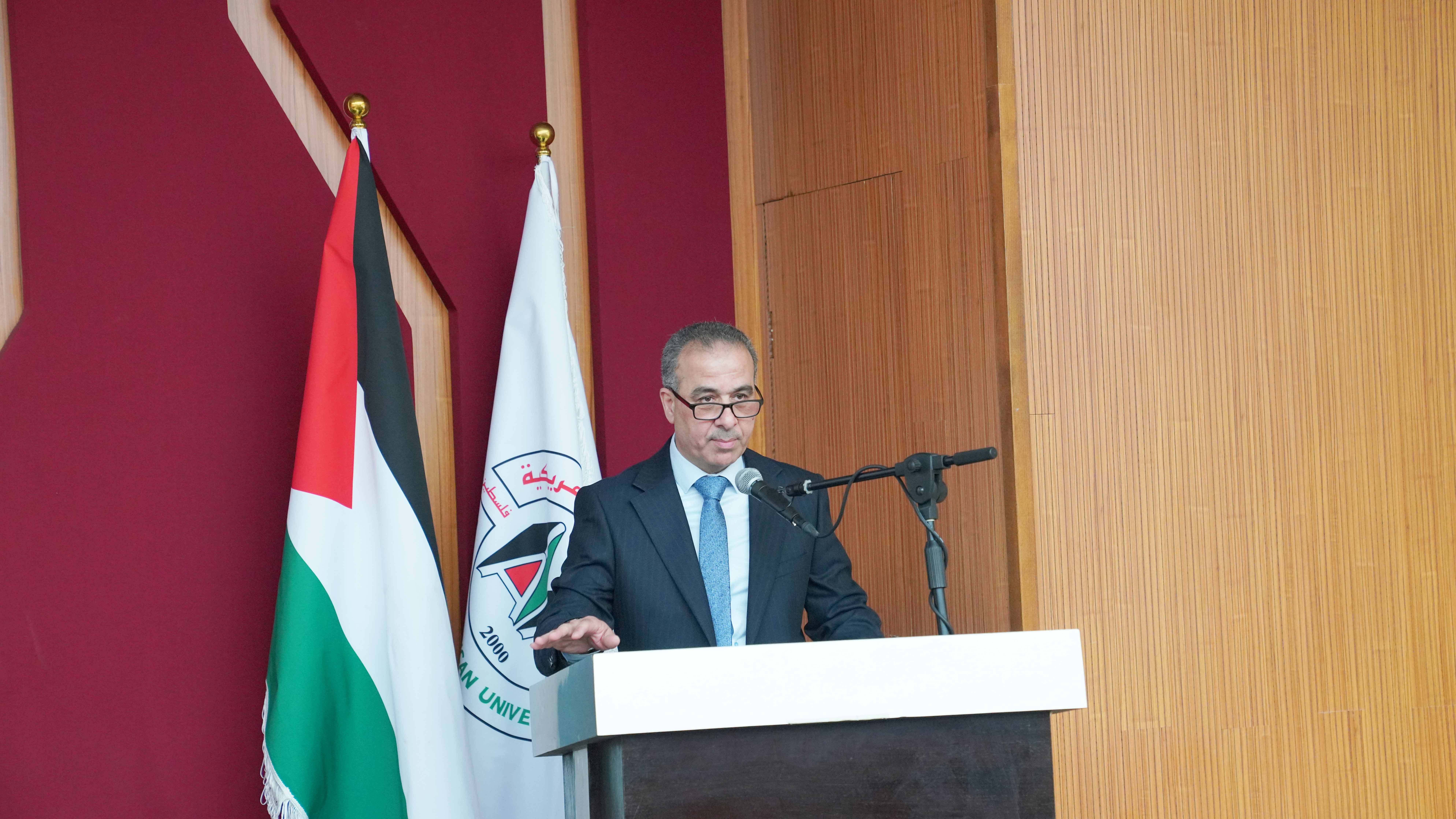
Dr. Laila Herzallah opened the workshop with a welcoming address, emphasizing the importance of this event, which brings together academic institutions and national economic bodies within a shared vision to promote sustainable development and serve Palestinian society.
She noted that holding this workshop reflects the integration of roles between universities and economic sectors, pointing out that the role of universities is no longer limited to education but now includes social responsibility and active participation in addressing economic and social challenges.
Dr. Herzallah affirmed the University's commitment to building strategic partnerships with various national institutions, foremost among them the General Union of Palestinian Economists, given its pivotal role in supporting economic thought and providing visions and solutions that bolster the resilience of the national economy. She stated that the University continuously strives to open new horizons for students and align educational outcomes with labor market needs, thereby enhancing opportunities for innovation and entrepreneurship and contributing to comprehensive development.
For his part, the Dean of the Faculty of Business, Dr. Raed Saad, explained that holding the workshop stems from the growing need for in-depth analytical approaches to understand the nature of the challenges facing the Palestinian economy and to anticipate ways to address them based on scientific and methodological principles. He emphasized the importance of strengthening integration between academic and professional institutions and activating their role in addressing economic issues and bridging the gap between theoretical knowledge and practical reality.
Dr. Saad pointed out that the Palestinian economy operates within a complex and highly specific environment, where the occupation constitutes a major structural constraint that restricts various aspects of economic activity, limits its capacity for natural growth, and affects the efficiency of resource allocation.
He also addressed a number of other challenges, including regional and international developments, wars and economic crises, rising prices and import costs, as well as the increase in oil prices and the measures related to the shekel imposed by the occupying authorities.
He explained that the Palestinian economy also faces internal challenges, most notably high unemployment rates, a weak productive base, and imbalances between economic sectors, in addition to recurring financial crises. He emphasized the need to focus on strategic pillars that include strengthening the role of productive sectors, developing human capital, supporting entrepreneurship and small and medium-sized enterprises (SMEs), improving the business environment, enhancing governance, and leveraging digital transformation to increase economic efficiency.
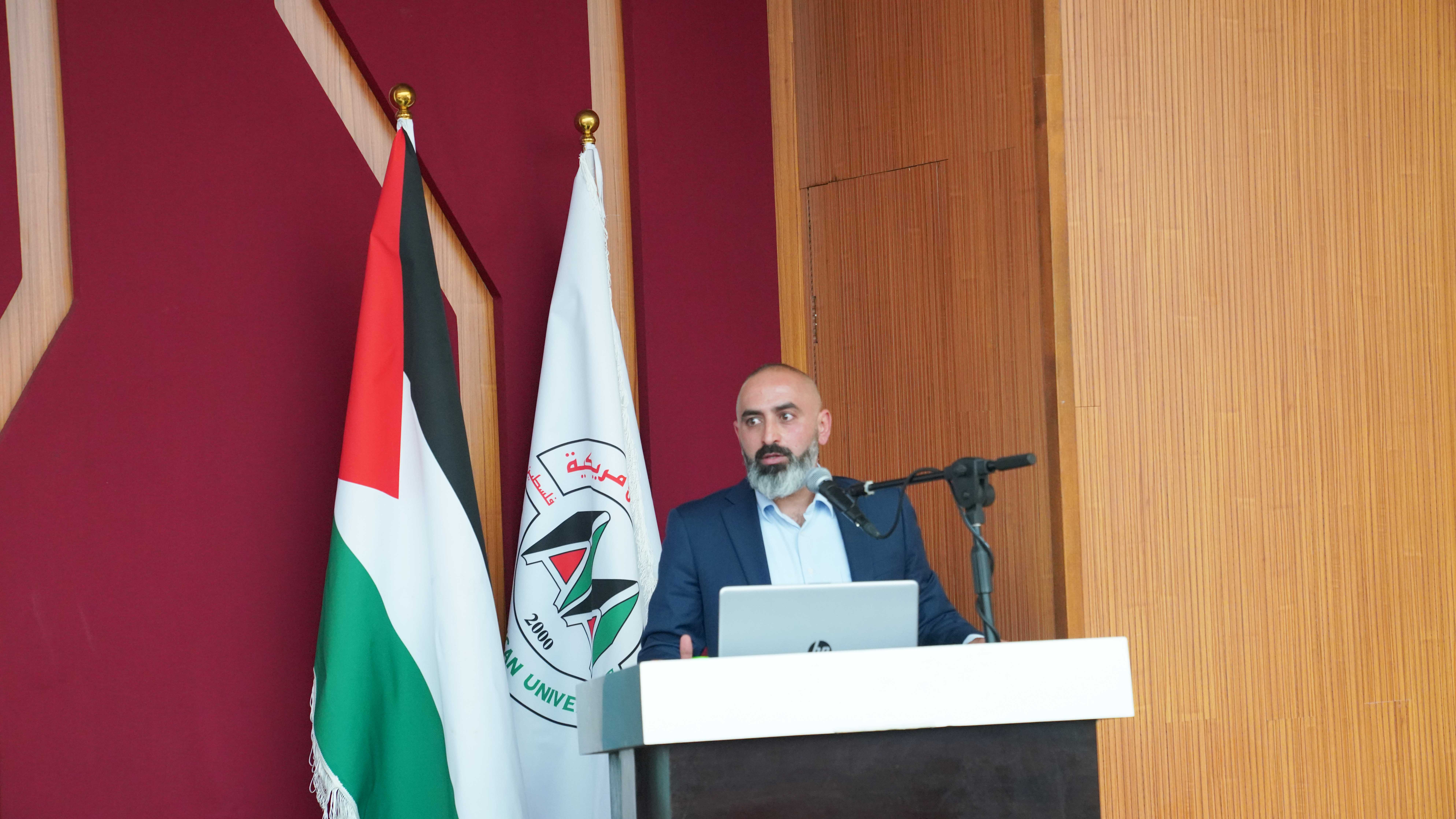
For his part, the Executive Director of the Union, Mr. Sultan Salahat, gave a presentation about the Union, explaining its vision, mission, and objectives. These include managing the affairs of Palestinian economists both within and outside Palestine, contributing to the development of the national economy, and promoting scientific research aimed at addressing economic problems. He also highlighted the Union's role in supporting Palestinian economists and publishing and translating specialized studies and research that serve various sectors of the economy.
For his part, the Secretary-General of the Union, Dr. Nasr Atiyani, reviewed the most prominent challenges facing the Palestinian economy, noting that these challenges have a long history dating back to 1948 and have worsened since 1967, amid attempts to link the Palestinian economy to the Israeli economy. He emphasized that the Palestinian people have managed to preserve their economic identity despite these challenges.
Atiyani explained that the challenges are divided into internal and external. The external challenge lies in the occupation's policies that affect the economy, such as flooding the market with Israeli goods and preventing the export of Palestinian products, especially those of animal origin, to Jerusalem.
He also pointed to internal challenges, including the weakness of the legal system, the incompleteness of some regulatory frameworks, and the small size of the economy, which necessitates strengthening and empowering its capabilities.
Regarding the future vision, Atiyani affirmed that achieving sustainable development is the primary goal for building a strong Palestinian economy. He stressed the importance of developing human resources to keep pace with global developments in the fields of production, technology, and artificial intelligence, in addition to strengthening the role of the private sector as a key driver of the development process.
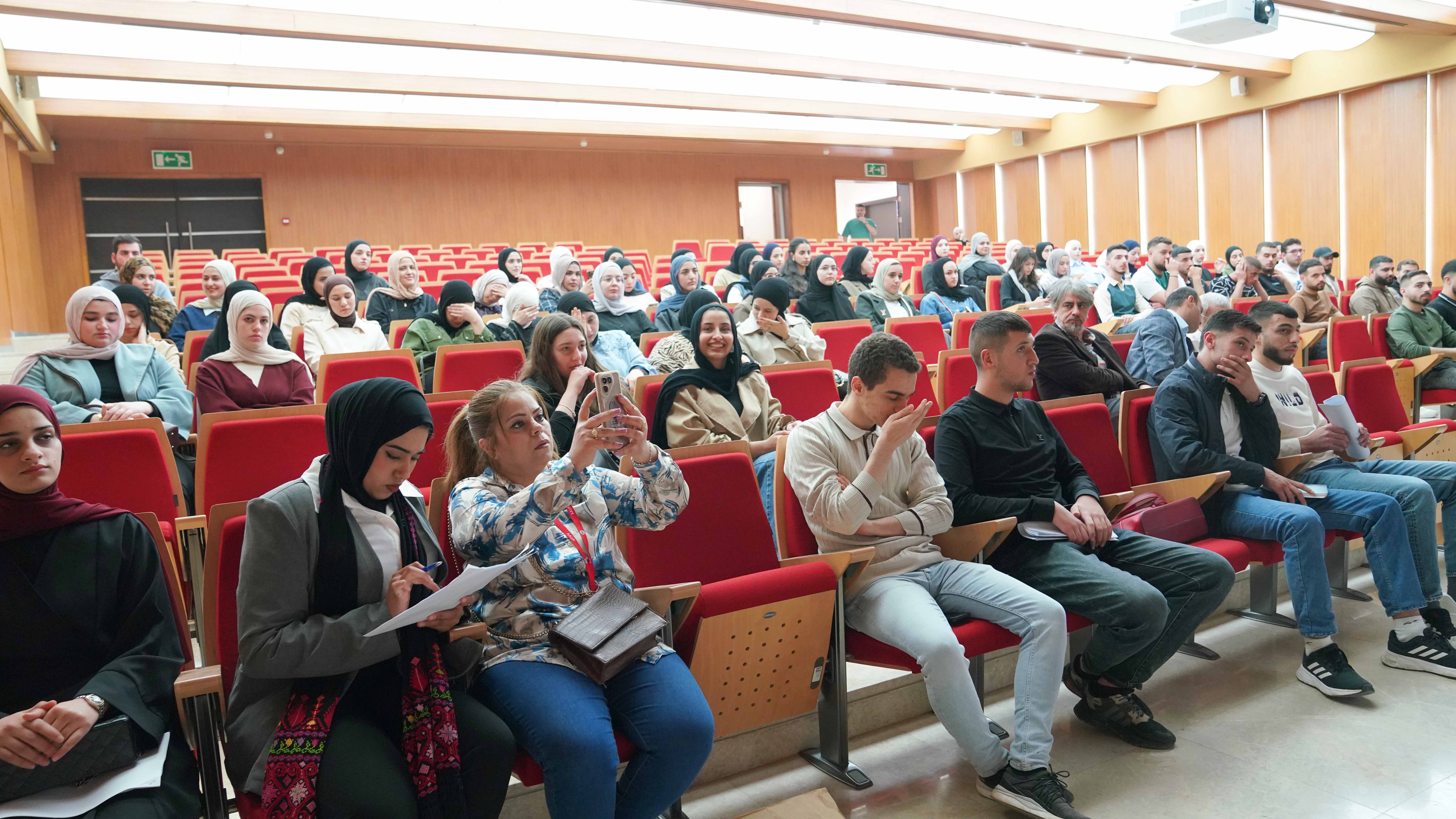
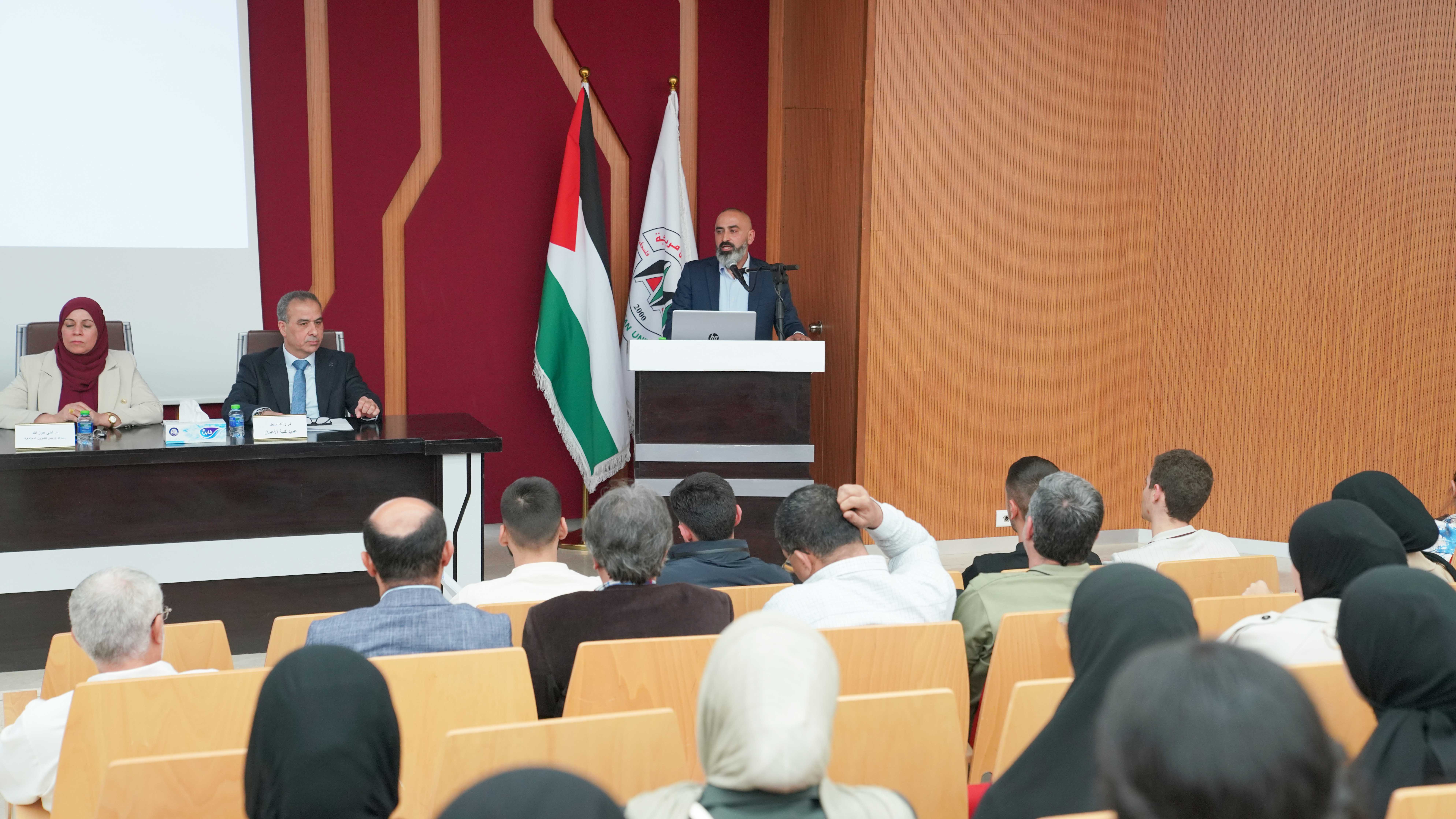
The workshop concluded with an open discussion for students and faculty members, during which a number of questions and comments were raised, enriching the dialogue and contributing to a deeper understanding of economic challenges and ways to address them. This reflects the importance of such meetings in enhancing students' economic awareness and connecting them to the issues facing their community.
Most Read
Arab American University Launches First Esports Summit in Palestine and Announces Bachelor’s Program in Digital Game Design and Development
Arab American University Hosts its Graduate, Engineer Momen Abu Salama, Tell Students about His Professional Success Journey
Hasib Sabbagh IT Center of Excellence and Innovation Pioneers Team at Arab American University Holds Second Edition of IP FUN ARENA Event
Arab American University and Capital Market Authority Hold “Trading Day” Event to Enhance Financial and Investment Awareness among Students
Weather
AAUP
, Palestine
The Tangible Temperature 20

To install AAUP WEATHER application on smartphones



Add new comment